
PRODUCTION · CNC BENDING

CNC bending of sheet metal

We offer custom sheet metal bending and production of precision metal parts according to the customer’s drawings and technical documentation — from individual prototypes to production runs.
3000 × 1500 working area, mm
± 0.5 accuracy, mm
12 мм carbon steel
bending CNC
CNC BENDING
METAL BENDING

Precision custom sheet metal bending
tailored to your needs

We provide sheet metal bending services based on completed technical documentation, drawings and digital models. If necessary, we check the feasibility of manufacturing the part and propose an optimal solution before production begins.

⌁ 3000 × 1500 maximum working area
+ ± 0.5 mm processing accuracy
◈ Materials Steel, stainless steel, aluminium
CNC Series production consistent repeatability
TECHNICAL CAPABILITIES

Processing
parameters

Basic production parameters for sheet metal bending.

01
WORKING AREA 3000 × 1500 mm
02
ACCURACY ± 0.5 мм
03
MAX. THICKNESS 12 12 mm · carbon steel
MATERIALS

Bending steel
and other metals

We select the processing method according to the material grade and thickness and the requirements for the finished part.

01Carbon steel
up to 12 mm
02Stainless steel
up to 6 mm
03Aluminium
up to 6 mm
04 Galvanized steel
up to 6 mm
APPLICATIONS

What we can manufacture

Sheet metal folding and bending allow individual parts, components and elements intended for further processing and assembly to be formed.

01

Machine parts

Precision parts and components for industrial equipment.

→
02

Housings and panels

Housing components, panels, covers and metal guards.

→
03

Brackets

Angle brackets, mounting components, mounts and structural parts.

→
04

Perforated parts

Sheets and components with complex hole geometries.

→
05

Bent profiles

Channel sections and special profiles manufactured in accordance with the customer’s technical documentation.

→
06

Components

Metal parts for series assembly and finished products.

→
PRODUCTION CYCLE

From a drawing
to a finished part

Sheet metal bending on press brakes can be a standalone service or part of PRITZ DEVELOPMENT’s full production cycle.

01 RFQ We receive the documentation
02 CHECK We check manufacturing feasibility
03 LASER We cut the material
04 BENDING Sheet metal bending
05 WELDING Welding and assembly
06 DELIVERY Delivery to the customer
WHY PRITZ DEVELOPMENT

Sheet metal bending as part of production

If necessary, we can carry out the entire processing cycle and manufacture a finished product.

01

Working from documentation

Production according to the customer’s drawings, specifications and requirements.

02

Prototypes and production runs

From individual parts and prototypes to regular series production.

03

Full cycle

Cutting, bending, welding, painting, assembly and packaging.

04

Delivery to the EU

Manufacturing and support for B2B customers in Poland and EU countries.

PRITZ DEVELOPMENT · KATOWICE

Do you need sheet metal bending?

Send a drawing or technical documentation. We will check production feasibility and prepare a quotation.

BENDING
CNC
DOCUMENTATION AND PREPARATION FOR BENDING
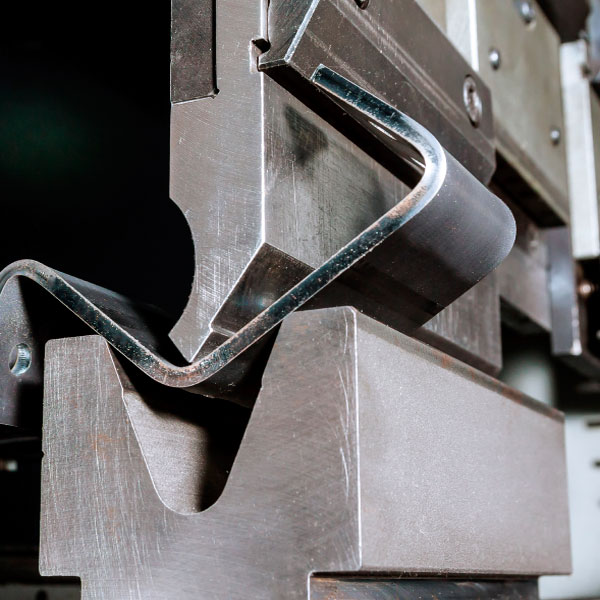
Bending on press brakes A press brake, also known as a sheet metal bending press, shapes sheet metal between a punch and a die. The bending punch and die are selected according to the material thickness and part geometry. Cold bending requires the material properties and formability to be taken into account. Air bending achieves the specified angle through the appropriate punch penetration, without pressing the sheet fully against the die surface.
Bending steel sheets Bending stainless steel sheet is planned taking into account the steel grade, thickness and required radius. For visible components, such as housings and guards, protecting the sheet surface is important. It is helpful to specify requirements for appearance and permissible tool contact marks in the documentation.
Stainless steel bending Bending stainless steel sheet is planned taking into account the steel grade, thickness and required radius. For visible components, such as housings and guards, protecting the sheet surface is important. It is helpful to specify requirements for appearance and permissible tool contact marks in the documentation.
Aluminium bending Bending aluminium sheets requires the alloy and material condition to be taken into account, as these affect the material’s formability. Tooling and bend radius are selected to suit the properties of the specific sheet and the requirements for the finished component.
Detail drawing and sheet metal flat pattern Technical documentation should specify the position of each bend line, bend angle, dimensions after forming and dimensional tolerances. Bend allowance is taken into account when developing the flat pattern to correctly determine the dimensions of the flat blank. Before work begins, the bend sequence is also established and tooling access to individual edges is checked.
Bend angle and radius The minimum bend radius depends on the material grade and condition, its thickness and the forming conditions. The inside bend radius is selected taking these limitations and the available tooling into account. When setting parameters, springback must also be taken into account, meaning the material’s partial return toward its original shape after the load is removed.
Angular accuracy and dimensional inspection of the part We agree on the required angular accuracy and dimensional tolerances based on the drawing. Depending on the project, trial bending can help verify settings and material behavior before manufacturing the production run. Dimensional inspection of the part includes checking dimensions, angles and geometry in accordance with the agreed acceptance criteria.